Pre-seed pitch · For investors
LINK is the Digital Baseplate for growing firms.
A finance-aware operating layer that connects the tools professional-services SMBs already use. Raising €600k to prove quote-to-cash and scale the playbook.
Connect, don't replace
Quote-to-cash wedge
Dutch beachhead
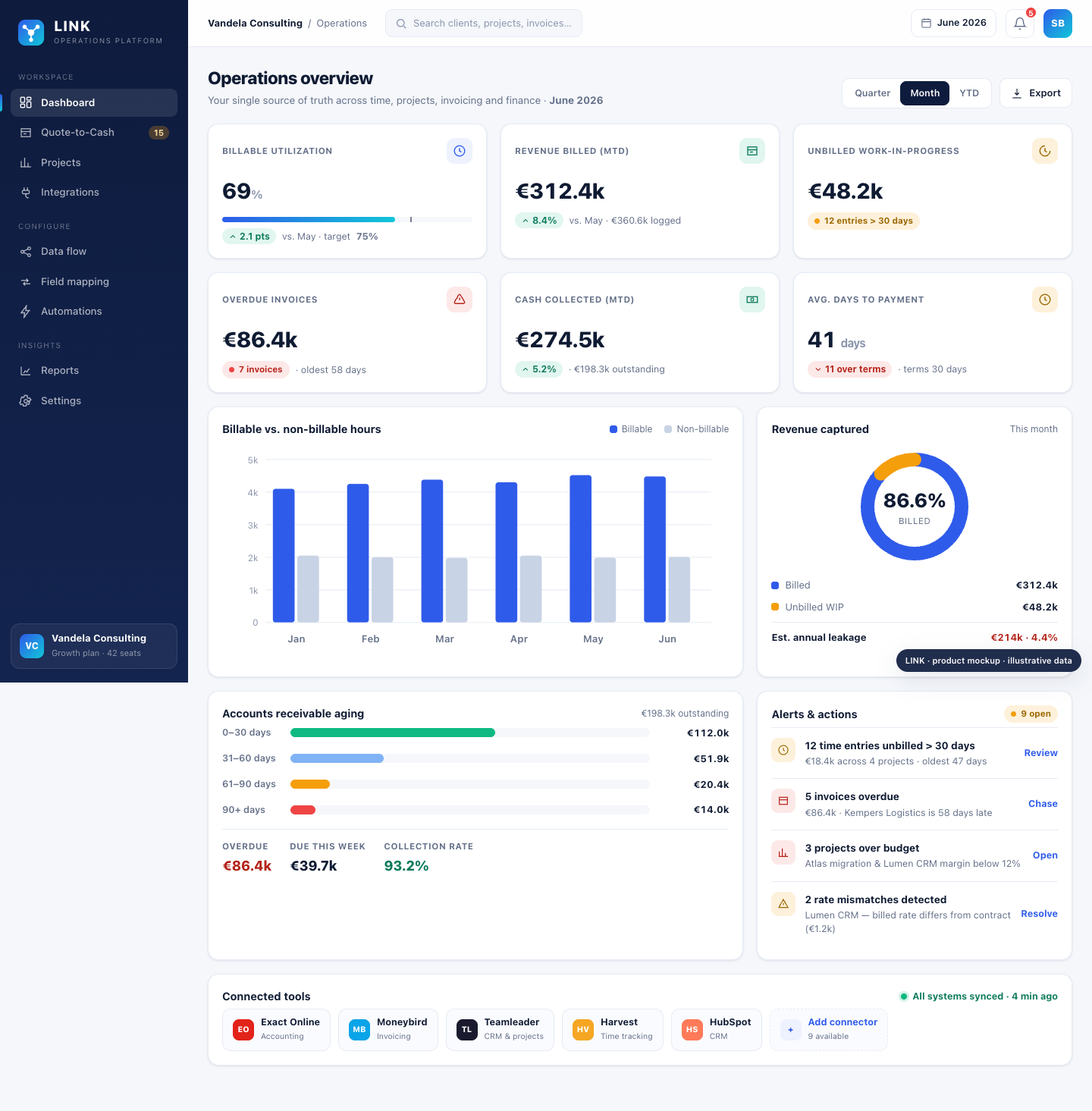
Cash collected
€312,480
Billable vs. unbilled
20–50Employee ICP
Complex enough to feel the pain, not ready for full ERP migration.
2,965Initial beachhead
Dutch professional-services firms in the target size band.
1Workflow wedge
Prove quote-to-cash value first, then expand.
Speaker: Simeon · ⏱ 0:30. “How much do you think gets lost to billing leakage every year? And who do you think feels it most?”
- My name's Simeon, this is LINK, and I'm joined by Wouter, Sachin, and Thiago. We've built LINK because growing professional-services firms are losing real money in the gaps between the tools they already run—time tracking, invoicing, and finance—that never quite talk to each other.
- We're going to show you how a €600k investment closes that gap, and how you get a return on it.
- Transition: “My colleague Wouter is going to walk you through exactly what that problem looks like.”